Shared vs. VPS Hosting: What to Compare
Shared hosting and virtual private server hosting serve different needs, so compare responsibilities as carefully as prices. Shared hosting places multiple customer websites within a managed environment. A VPS provides an isolated virtual server with allocated resources, although the physical hardware may still be shared.
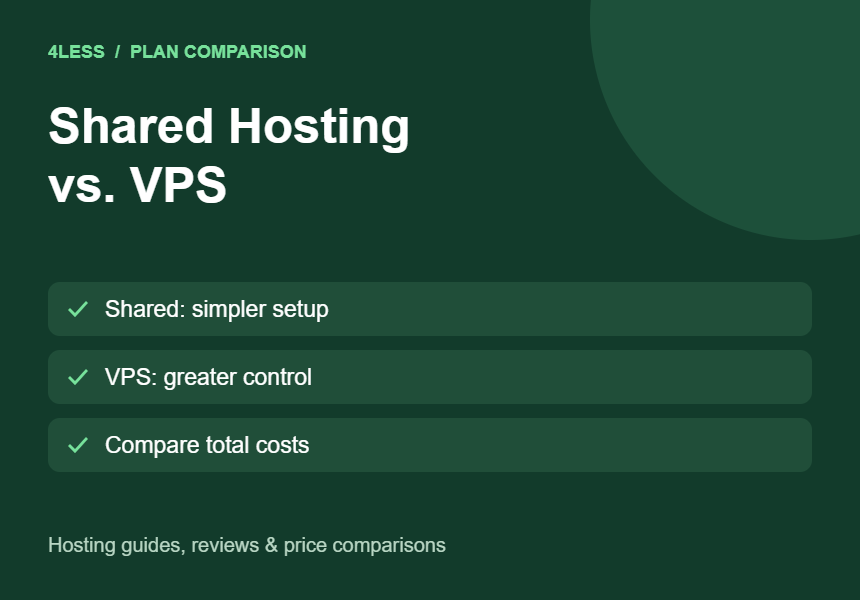
For a small website, shared hosting can simplify maintenance because the provider usually manages the server software and control panel. However, processor, memory and usage policies can limit demanding applications. Check the actual allowances instead of assuming every shared plan behaves the same way.
A VPS can offer greater configuration control and more predictable resource allocation. That flexibility also introduces responsibility. With an unmanaged VPS, you may need to install updates, configure security, monitor services and resolve server problems yourself. Managed services vary, so request a precise description of included tasks.
Compare the full cost of each option. VPS pricing may exclude control panel licences, backups, management and other tools included with shared hosting. Consider your own administration time as part of the budget.
Read reviews relevant to the hosting product, not only the provider name. Choose based on workload, technical skills and growth expectations. Neither option guarantees faster performance, stronger security or better support.
Latest Blog